Elevating MCO & ORL: The Vision Forward
The Greater Orlando Aviation Authority (GOAA) has unveiled a new strategic vision designed to guide the future of Orlando International Airport (MCO) and Orlando Executive Airport (ORL) over the next decade.
Centered on enhancing the customer experience and strengthening the Aviation Authority’s role as a driver of economic growth and innovation, the vision is built around four foundational pillars: Customer Experience, Community, Infrastructure, and People.
Access the Visioning Workshop Presentation Video.
Goals for Each Foundational Pillar
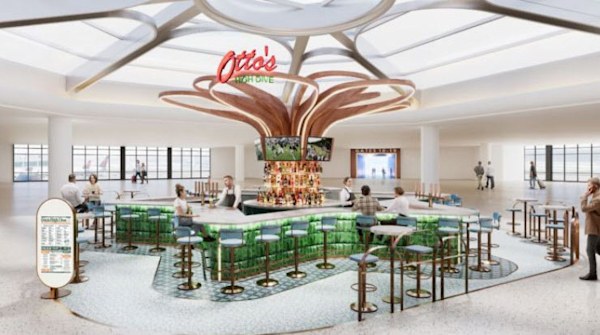
Customer Experience
- Support all activities and projects necessary to attain a 5-star Skytrax rating.
- By 2035, activate 60% of ORL's current vacant real estate assets while maximizing revenue and advancing the Aviation Authority’s strategic mission.
- Scale ARFF staffing and infrastructure to meet forecasted emergency service needs of 9,500 calls for service within industry-standard response times by 2035.
- Finalize the implementation of a perimeter intrusion detection system by 2030.
- By 2030, attain IATA optimum level of service for all airport facilities.

Community
- By 2030, increase non-aeronautical revenue by 30% compared to the revenue figures recorded for 2025.
- Develop at least one new cargo processing facility and complete an FAA-approved on-airport AAM vertiport by 2030, designed to accommodate multiple commercial operators and support the future of air mobility.
- Develop The Park at MCO or a seasonal outdoor entertainment venue by 2036 that attracts over 100,000 annual visitors.
- Continue to preserve Sun Rail right-of-way at MCO and be a participating regional partner to bring Sun Rail to MCO.
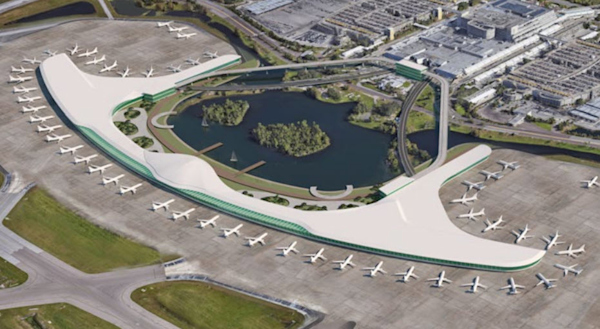
Infrastructure
- By 2030, increase available public parking at the passenger terminals by 8,000 spaces.
- By 2028, install a common-use self-service bag drop at all ticketing counters in Terminal C. By 2030, complete the construction of a new Baggage Handling System for Terminals A and B.
- By 2030, complete Airside 2 gate expansions. By 2035, complete Terminal C Phase 2 Construction.
- By 2030, incorporate additional passenger conveyance in Terminal C from Palm Court to Gate C230.
- By 2030, attain key target financial metrics of 1.4x all-in Debt service coverage and Cost per Enplaned Passenger (CPE) as a percentage of fare revenue of less than 10%.

People
- By 2030, launch a fully operational Business Incubator at MCO to drive innovation and strategic growth, including increasing the number of small businesses working with MCO by 40%.
- By 2030, attain an overall employee engagement score of 80%.
- Implement at least four innovative or performance improvement initiatives annually starting in 2026.
Strategic goals and initiatives planned for the next 5 and 10 years in detail:
Customer Experience Team:
5-Year Vision:
- Achieve a 4-star Skytrax rating by improving and maintaining at least a 4 in all evaluated areas.
- By 2030, achieve Level 4 ACI-ASQ Airport Customer Experience Accreditation by meeting all required CX standards in collaboration with GOAA teams.
- By 2029, launch an AI-integrated travel assistant and implement AI-powered communication tools across all passenger-facing channels, achieving a 90% satisfaction rate in post-interaction surveys.
- Enhance airport-wide accessibility by upgrading accessibility support systems to meet or exceed ADA standards, integrating a structured Airport accessibility plan, reducing service gaps, and providing services that improve accessibility, resulting in a 50% reduction in accessibility complaints.
- Create and open at least one designated family zone in each terminal, featuring comfortable seating and family-friendly amenities to enhance the travel experience for families, resulting in a 90% satisfaction rate from families in post-use surveys.
- Develop an Airport Learning Management System/Computer-Based Training platform to provide customer service, airport-specific, and soft skills training, ensuring a 100% customer service training completion rate for all badged employees and open access to additional training modules.
10-Year Vision:
- Achieve a level 5 ACI-ASQ Airport Customer Experience Accreditation. Supplemental information for this recommendation can be found in Appendix 6.1.
- Integrate the AI travel assistant into at least 15 airline booking systems to provide travelers with real-time itinerary management, personalized pre-travel recommendations, rebooking assistance during disruptions, and proactive notifications.
- Create and open “Destination MCO” providing family-friendly experiences, including augmented and virtual reality, movies, concerts, and themed (educational, aviation, cultural, holiday) events to enhance the travel experience, resulting in a 90% satisfaction rate from families in post-use surveys.
- Identify and build an on-site Global Training Institute for Airport employees and US airports to develop aviation-related skills and complete aviation-related training, and maintain a 90% post-training survey satisfaction score.
Operations Team:
5-Year Vision:
- By 2030, 20% of all baggage flow is augmented from off-site locations relieving congestion on the baggage system, enhancing passenger convenience, and leveling out peaks and valleys of normal passenger baggage flow.
- By 2030, 40% of passengers are using self-bag drop, allowing passengers to drop off baggage early and giving them more flexibility to experience MCO and spend money with reduced stress.
- By 2030, identify ARFF station locations to meet response time criteria as outlined in NFPA 1710 and FAA 139.
- By 2030, complete cost/benefit analysis of alternate combat shift schedules and determine best scheduling model for ARFF by tracking trends in surrounding agencies.
- By 2030, 25% of the MCO campus is equipped with facial recognition at employee access points.
- By 2030, Law Enforcement is at 100% staffing, and construction of a public safety building is underway.
- By 2030, 100% of Colonial Promenade parcel under lease, 10% of current vacant aeronautical land developed (hangars); 55% of current vacant non-aeronautical land leased and under construction; runway capacity enhancement/new airport partnerships defined.
10-Year Vision:
- By 2035, 30% of all baggage flow is augmented from off-site locations, relieving congestion on the baggage system, enhancing passenger convenience, and leveling out peaks and valleys of normal passenger baggage flow.
- By 2035, 70% of passengers are using self-bag drop, allowing passengers to drop off baggage early and giving them more flexibility to experience MCO and spend money with reduced stress.
- By 2034, complete design and procurements for two additional stations (projected north and south ARFF stations, based on the Master Plan) and eight additional apparatus.
- By 2035, complete changeover of all firefighter bunker gear to PFAS-free.
- By 2035, SOC has a 24/7 threat management team with SOC-deployed drone reconnaissance capability.
- By 2035, 75% of the MCO campus is equipped with facial recognition at employee access points.
- By 2035, undergo facility and grounds improvements alongside IOC development and construction.
- By 2035, ORL- Roadway/entrance/landscaping improvements at 80%; 50% of current vacant aeronautical parcels under lease; 75% of current vacant non-aeronautical parcels under lease; runway capacity enhancements process at 60%.
Commercial Team:
5-Year Vision:
- Enhance Passenger Experience: Boost satisfaction by 15% through better air service, faster immigration, immersive concessions, and smarter marketing with UTM tracking.
- Deliver Smart Infrastructure: Complete MRO Campus, Cargo Lease, and Vertiport by 2030, with AI logistics, EV support, and data-driven marketing plans.
- Strengthen Airline & Brand Partnerships: Secure airline agreements with AI/digital twin tools and shift brand perception through cross-department marketing liaisons.
- Elevate Retail & Revenue: Roll out Terminals A & B concession plan, grow sales per passenger by 45%, and win AXN award with immersive campaigns and analytics.
- Unify Operations & Marketing: Launch AI-powered platform to cut wait times by 25%, optimize EV logistics, and improve Branding SharePoint for collaboration.
10-Year Vision:
- Build & Expand: Deliver the Innovation Campus, redevelop USPS site, prep East Airfield, and open CONRAC with autonomous readiness and AAM/rail support.
- Grow & Streamline: Expand Terminal 2, increase efficiency of international arrival processing by 20%, and boost international flights by 7% utilizing advanced analytics and marketing techniques.
- Engage & Monetize: Launch Terminal 1 outdoor venue (250K visitors, $3M revenue) and roll out biometric ads to grow concessions revenue by 20%.
- Align & Accelerate: Standardize all airline agreement templates and reduce terminal planning cycle time by 50% through the implementation of AI-assisted digital twins and simulation tools. To sustain alignment and collaboration, host two annual Airline Partnership Summits that bring together internal teams and airline partners to review progress, share data insights, and identify new efficiencies.
External Affairs Team:
5-Year Vision:
- Biometrics: By 2028, partner with U.S. Customs and Border Protection to pilot enhancements in Seamless Border Entry at MCO, cutting passenger processing time by 60%.
- AAM: By 2030, implement an on-airport commercial AAM program with FAA-approved vertiport infrastructure for at least two operators.
- Onsite Studio: By 2027, launch a terminal-based broadcast studio to deliver real-time updates and improve guest satisfaction through multi-channel feedback.
10-Year Vision:
- The Park at MCO: By 2032, attract 10,000+ visitors in the first year through parking and event attendance, positioning MCO as a regional destination.
- SMS Geofencing: By 2031, communicate with MCO SMS subscribers utilizing our geofencing system and AI chatbot across MCO’s digital platforms to resolve 75% of inquiries autonomously.
- Strategic Partnerships: By 2033, strengthen aviation safety and efficiency through academic and industry partnerships, achieve Net Promoter Score (NPS) of 50 or better based on passenger and community surveys.
Development Team:
5-Year Vision:
- Master Planning: Complete the Master Plan Update and Mobility Master Plan for MCO & implement CIP by 2027.
- AAM: Establish East Airfield and/or Train Station Vertiport locations, collaborating with FDOT & FAA by 2028.
- Operations: Finalize new GOAA office complex & public safety and operations annex facility by 2029.
- Nomenclature: Initiate the first Phase of the Nomenclature transition by 2030.
- SOPs: By 2028, develop a fuel tank and stormwater restoration program and associated SOPs.
- Technology/Innovation: By 2030, implement PMIS, establish an on-site AR/VR Design Visualization Studio (Igloo), and use modular construction for a minimum of one project.
- Execute Capital Improvement Plan: By 2030, CIP completed or in construction.
10-Year Vision:
- Terminals: By 2032, finalize the options for the redevelopment of Airsides 1 and 3 and the concept for Terminal D.
- Mobility: Prepare campus for fully autonomous vehicles by 2035.
- Roadway Signage: Install digital Roadway Signage campuswide, fulfilling the Roadway Signage Master Plan by 2035.
- Smart Wayfinding: By 2035, expand the digital signage ecosystem to 100% at Terminal 2.
- Leading-Edge: Become a leading airport in resiliency and be known globally for best development practices by 2035.
- Land Management: By 2030, implement a land management program that ensures 50% of currently developable land is preserved for development.
Finance Team:
5-Year Vision:
- ERP System Implementation: By 2030, solicit proposals and select an Enterprise Resource Planning (ERP) system that meets organizational requirements for finance, procurement, and risk management. System will provide 100% visibility of status of payments and fully integrate into PMIS system.
- Procurement & Workflow Automation: By 2030, optimize Oracle, Maximo, and OpenGov platforms by automating at least 80% of procurement and material management workflows.
- Enterprise Risk Management (ERM): By 2030, create and implement an Enterprise Risk Management (ERM) program that includes risk identification, mitigation strategies, and reporting protocols, facilitating ad hoc risk assessments within a two-week turnaround period.
10-Year Vision:
- ERP System Implementation: By the end of 2035, fully implement the selected ERP system across all relevant departments, ensuring 100% user adoption and integration with existing platforms.
- Procurement & Workflow Automation: By 2035, integrate robotics into all warehouse operations to improve efficiency by at least 30% and reduce manual handling errors.
- Enterprise Risk Management (ERM): By 2035, launch ERM executive dashboards that provide real-time visibility into key risk indicators across all business units, with 90% management engagement and use of ERM.
Information Technology Team:
5-Year Vision:
- Campus Fiber: Completion of the fiber ring infrastructure in phases, with 20% completed each year by 2030.
- Physical Security: Deploy biometric-enabled infrastructure by 2028 and establish unified threat detection by 2030.
- IT Security: Enable Windows Hello Password-less Authentication by 2030.
- Data: Implement a data Lakehouse in phases with 20% completed each year by 2030.
- Customer Experience: By 2028, the AI-Bot contact center platform will be fully integrated into the ITOC, enabling automated resolution of at least 50% inbound calls.
10-Year Vision:
- Campus Fiber: Deploy small cells and CBRS services in phases, with 20% completed each year by 2035.
- Physical Security: Establish an integrated security framework combining biometrics, system integration, and analytics-driven threat detection to enable intelligent, proactive protection by 2035.
- IT Security: Deploy AI Threat Defense, minimizing false positives by 2035.
- Data: Integrate 50% of products into a data Lakehouse by 2029, with full integration by 2035.
- Customer Experience: Deploy AI-powered contact center platform by 2027 and expand collaboration dashboard with phased completion by 2035.
Administrative Team:
5-Year Vision:
- Digital Onboarding: Achieve 90% onboarding adoption across all departments by 2027.
- Hiring Efficiency: Reduce average time-to-hire by 25% by 2028.
- Onboarding Satisfaction: Reach a 95% satisfaction rate for onboarding experiences by December 2027.
- Leadership Academy: Launch a development program for emerging leaders with 80% participation from high-potential employees by 2026.
- Digital recordkeeping: Convert 100% of employee files and HR transactions to digital format by 2030.
10-Year Vision:
- Internal Mobility: Increase internal mobility to 30% of all hires by 2032.
- Predictive Hiring Accuracy: Reach 90% accuracy in role matching using AI and data analytics by 2035.
- Self-Service Tools: Achieve full adoption of self-service HR tools for routine tasks (e.g., benefits updates, time-off requests) by 2035.
- HRIS Forecasting: Use predictive analytics within HRIS to anticipate turnover, engagement, and training needs by 2035.
- Personalized Insights: Provide employees and managers with role-specific dashboards for performance and development tracking by 2032.
Strategy Performance Improvement Team:
5-Year Vision:
- Innovation: Quarterly "Dolphin Tanks" starting in 2025, with one High-Impact Use Case launched per Quarter.
- Innovation: By December 2026, implement at least two innovation initiatives.
- BI/AI: Implement a standardized KPI tracking dashboard for all departments by June 2026.
- Business Planning / Quality: By the end of 2025, update the Strategic Plan to ensure all strategic initiatives are aligned with the approved vision.
- Business Planning / Quality: Achieve 25% operational efficiency across two departments by 2030.
10-Year Vision:
- Innovation: Increase employee-submitted innovation ideas by 100% by 2030.
- BI/AI: By 2035, integrate data and SMART infrastructure with centralized AOC (Airport Operations Center) for 90% of KPI metrics. Predictive AI-driven analysis for facility planning, demand forecasting, and PAX flow optimization reduces OpEx by 20%.
- Business Planning / Quality: Institutionalized Kaizen approaches to drive ongoing quality gains across all departments, with 75% of leadership and mid-managers trained in quality management principles.